

When you’re buying a new air conditioner you’ll probably see stars, energy labels, and confusing acronyms — but what do they actually mean? Most people assume the most important thing is how efficiently an air conditioner cools your home. But for many Australian homes, that’s not the full story.
In fact, heating efficiency can matter even more. At MAC Trade Services, we help homeowners and businesses choose energy-efficient heating and cooling solutions that reduce energy bills and improve comfort year-round. Here’s what you really need to know about air conditioner efficiency ratings.
Remember: bigger does not mean better when it comes to aircon systems. Don’t be fooled into thinking you need the biggest system for your bedroom. Typically, the smaller the system the more energy efficient it is, and most 20–25sqm bedrooms shouldn’t need more than a 2–2.5kW system to efficiently heat or cool them. The bigger the aircon, the more energy it will consume.
Understanding the New ZERL Energy Rating Labels
Every new air conditioner sold in Australia must display an energy rating label, making it easier to compare systems quickly. They typically show:
- Cooling efficiency
- Heating efficiency
- Estimated yearly energy use
- Star ratings for different climate zones
The more stars an appliance has, the more energy efficient it is. However, the label also includes different climate zones, which is where things can get confusing.
Why Heating Efficiency Often Matters More
Many homeowners focus on cooling efficiency, but depending on where you live, heating may actually use more electricity over the year. For most Australians living in the southern parts of the country — including Victoria, South Australia, and New South Wales — air conditioners are often used more for heating than cooling throughout the year.
This means choosing a system with high heating efficiency can have a bigger impact on your power bills. Today, split system air conditioners are typically the cheapest way to heat and cool your home. So ditch those portable fan heaters — switch to using your split system instead. It doesn’t guzzle power or overheat a space.
How to Read the New ZERL Label
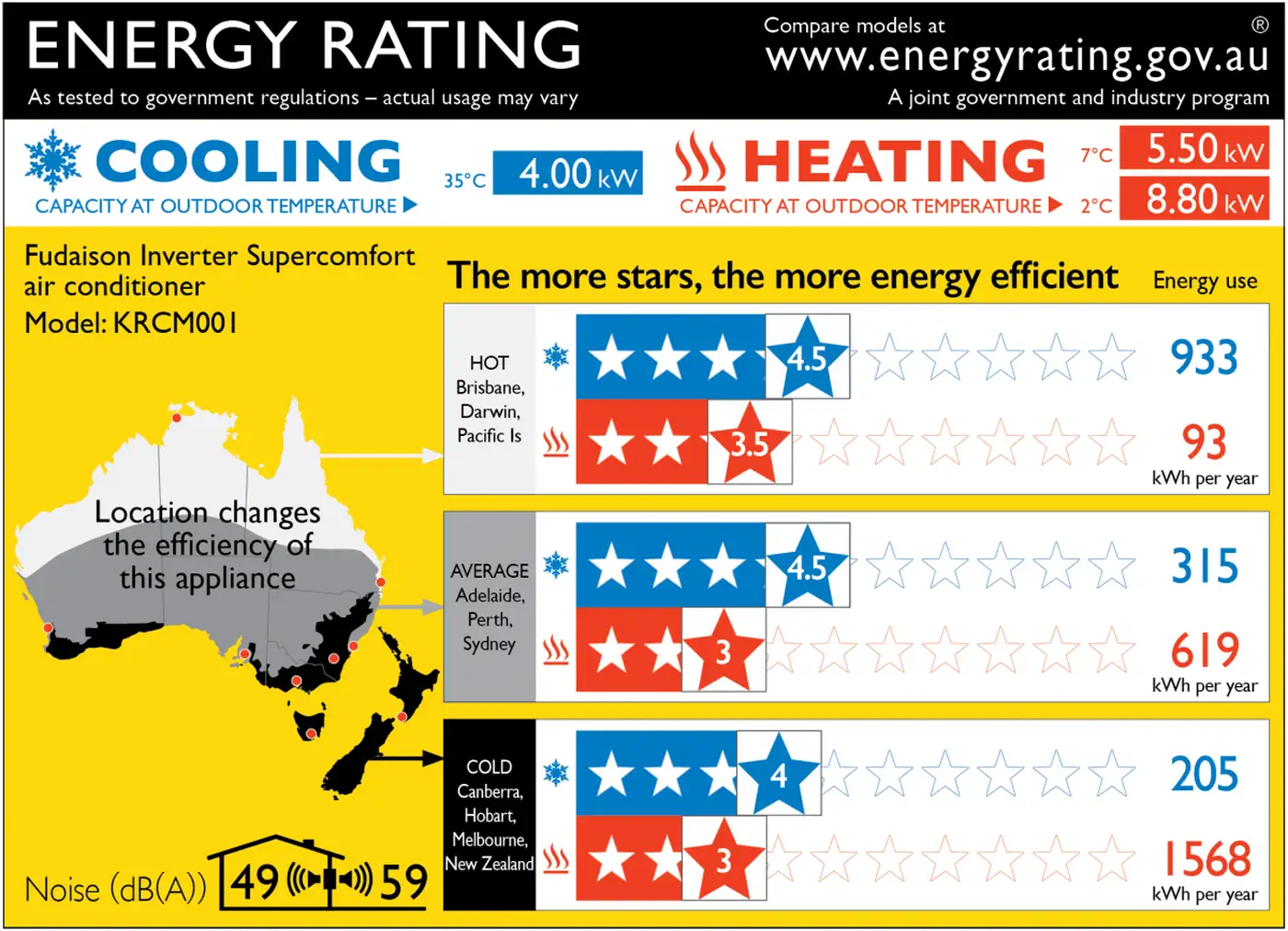
1. Identify Your Climate Zone
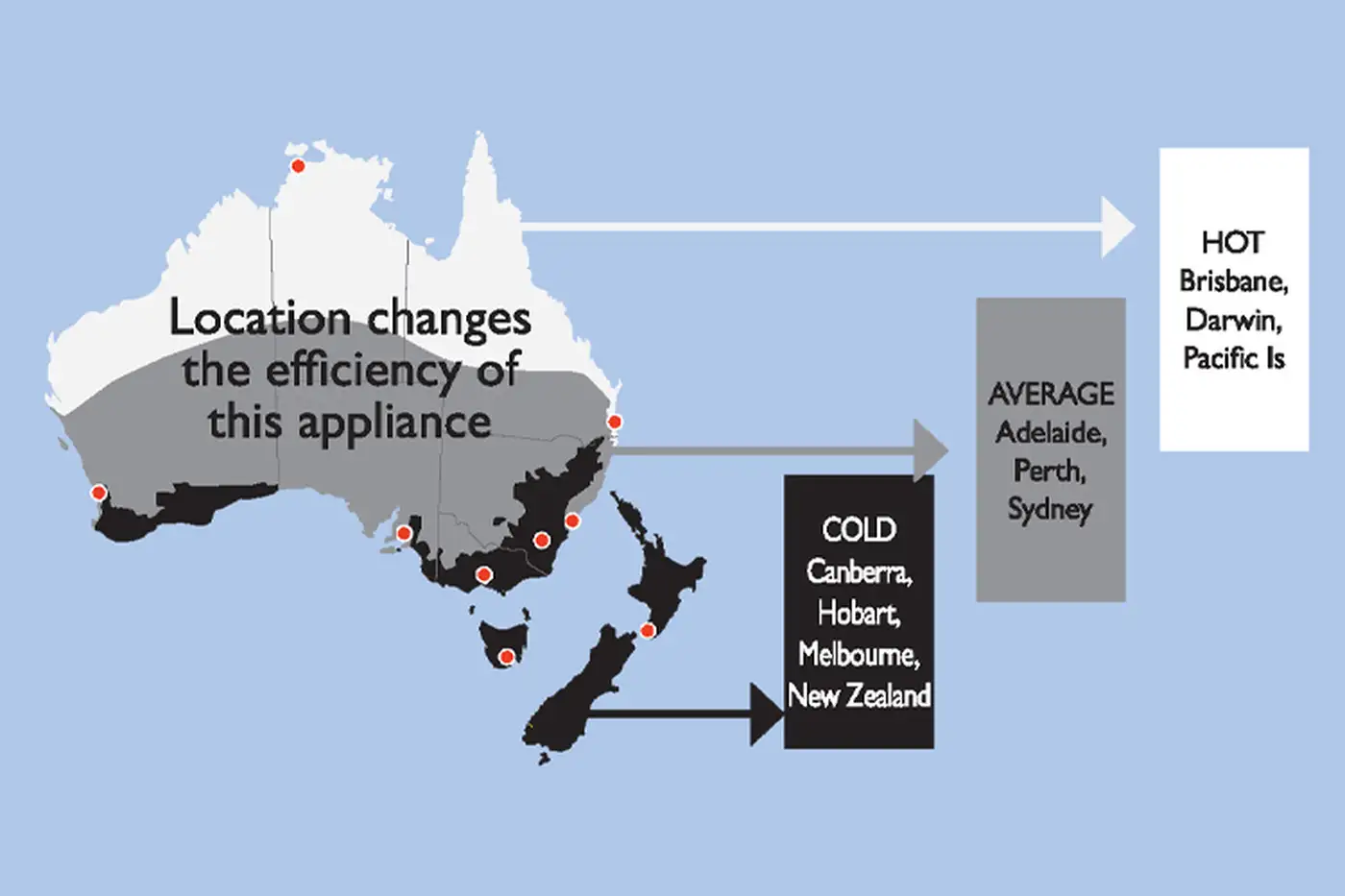
Start by checking the climate map displayed on the label. Australia is divided into three zones — Hot, Average, and Cold. Locate the zone that matches your region so you can review performance data relevant to your local conditions.
2. Look at the Star Ratings
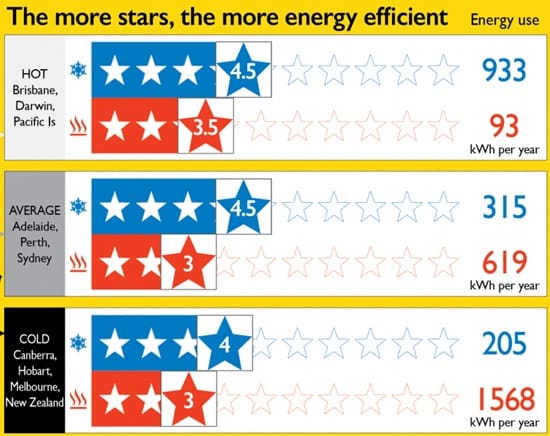
The star ratings provide a quick snapshot of the system’s energy efficiency.
- Blue stars represent cooling efficiency. The more blue stars a unit has, the more efficiently it cools your home, helping lower electricity costs during warmer months.
- Red stars indicate heating efficiency. A higher number of red stars means the system performs better when heating, helping reduce energy use during colder periods.
3. Review the Capacity Output (kW)
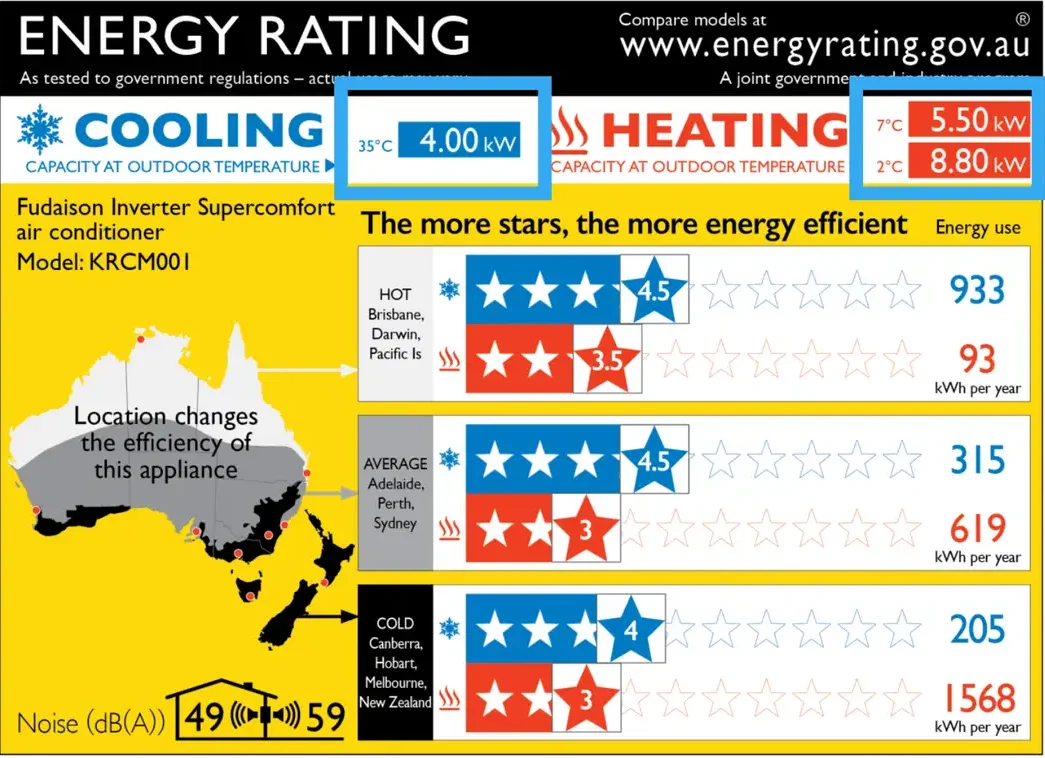
The capacity rating, measured in kilowatts (kW), shows how much cooling or heating power the unit can produce. These values are usually listed at different outdoor temperatures so you can see how the system performs under varying conditions.
- A bedroom or area around 20–25sqm will only need a system around 2kW in size.
- A living space over 40sqm will typically need a 5kW system.
- If you have west-facing windows and/or high ceilings, you may need to go a size up.
Remember: the smaller the unit, the more energy efficient. Don’t pop a 5kW in your 20sqm bedroom thinking it will serve you better than a 2kW — oversizing means higher energy bills and higher supply and installation costs.
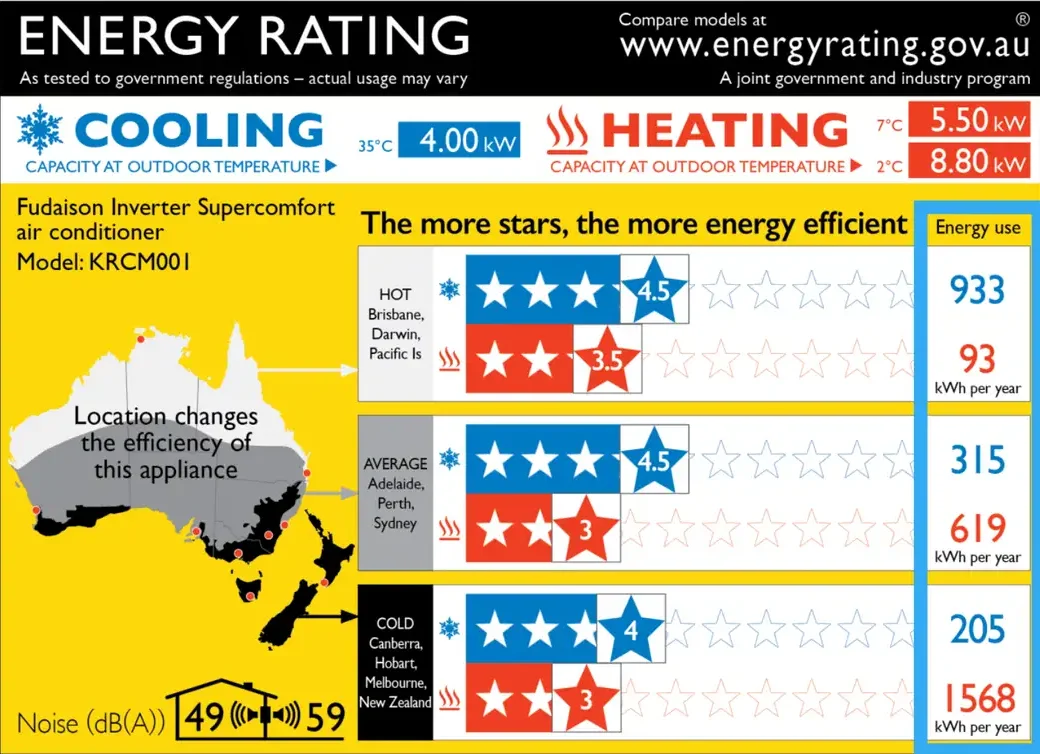
4. Check Estimated Annual Energy Use (kWh)
This figure estimates the electricity the system will use each year for both cooling and heating within your selected climate zone. Generally, a lower kWh value means greater efficiency and lower ongoing energy costs.
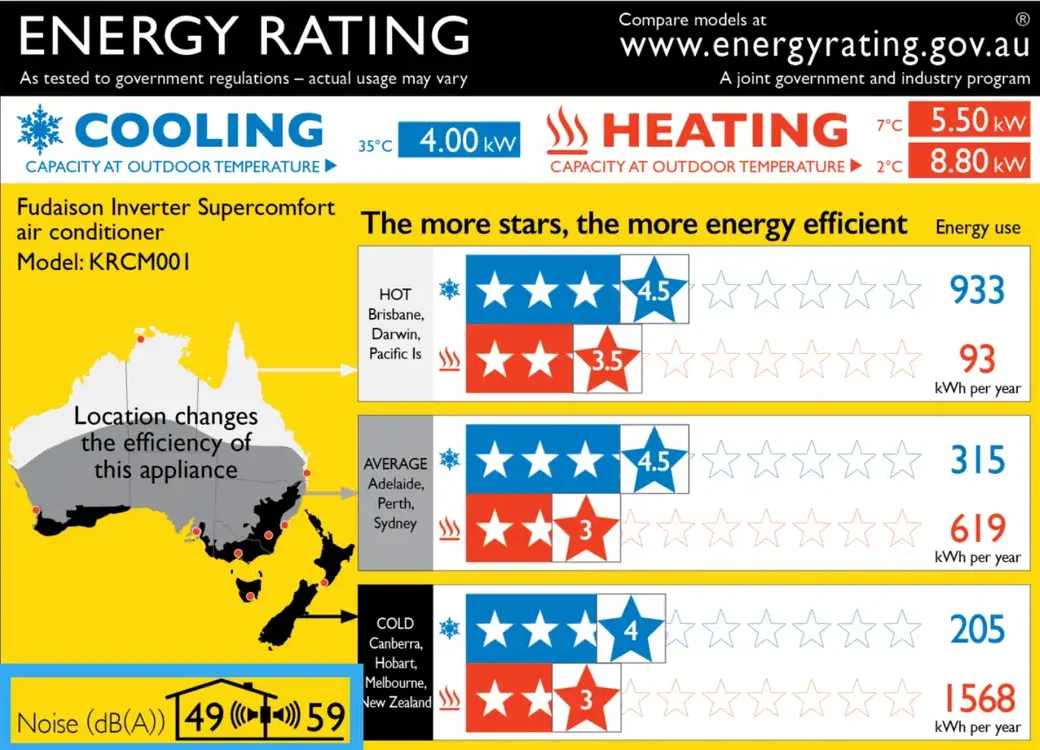
5. Consider the Noise Level (dBA)
Sound levels are measured in decibels (dBA) and indicate how loud the indoor and outdoor units will be during operation. Units with lower dBA ratings operate more quietly, which can make a noticeable difference in bedrooms, living spaces, and outdoor areas.
Choosing the Right System for Your Home
At the end of the day, the “best” air conditioner isn’t the one with the most stars overall — it’s the one that performs efficiently where you live, delivers the heating and cooling capacity you actually need, and won’t drive up your annual energy use.
Make sure you size your systems correctly for the rooms they will be working in. Don’t oversize regardless of rebates or a sales pitch. Get the right system for the space so you don’t overpay in running costs.
MAC Trade Services can guide you through the labels and recommend the right fit, matched with the right brands and the best government rebates available to reduce upfront installation costs.
Contact MAC Trade Services today to start your electrification journey and see what you might be eligible for:
- 📞 1300 430 917
- 🌐 www.mactradeservices.com.au
- ✉️ customerservice@mactradeservices.com.au
- 📍 Level 1/134 Fullarton Rd, Rose Park SA 5067
